

Blood Flow Restriction Training: A Versatile Tool for Building Strength With Less Load
Strength is an important part of recovering from injury, returning to activity, and staying physically capable.
But building strength does not always mean lifting heavy weights.
At Waymaker Physical Therapy, one tool we can use to challenge muscles while keeping the external load relatively light is Blood Flow Restriction training, or BFR.
What makes BFR especially useful is its versatility. It can be incorporated into many different exercises and stages of rehabilitation, from relatively simple strengthening movements to more advanced functional training.
What Is Blood Flow Restriction Training?
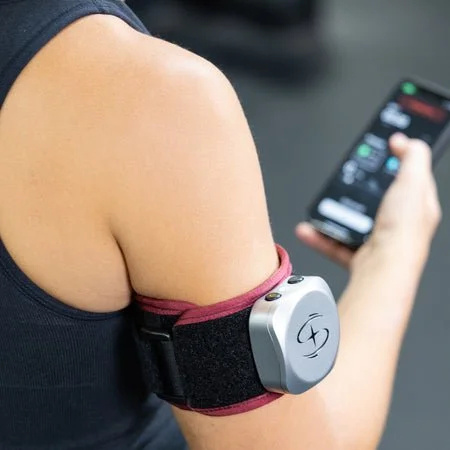
BFR uses a specialized cuff placed around the upper portion of an arm or leg.
The cuff is inflated to an individualized pressure that reduces venous blood flow out of the working limb while still allowing arterial blood to enter.
While the cuff is in place, the patient performs exercise using relatively light resistance.
Because of the environment created within the working muscles, those muscles fatigue much sooner than they normally would with such light weight. This allows us to create a meaningful muscular training stimulus without necessarily needing heavy resistance.
APTA notes that BFR can help patients make greater strength-training gains while lifting lighter loads, reducing the overall mechanical stress placed on the limb. Learn more about BFR from the American Physical Therapy Association.
More Than Just a Post-Surgical Tool
BFR is often associated with post-operative rehabilitation, and that is certainly one area where it can be valuable.
But its usefulness goes well beyond that.
Depending on the individual and their goals, BFR can be incorporated into exercises for the arms, shoulders, legs, and other functional movements.
For example, BFR may be paired with exercises such as:
Curls and other arm-strengthening movements
Shoulder exercises
Squats and lower-body strengthening
Pulling and rowing movements
Functional and sport-related exercises
Rehabilitation exercises performed with relatively light resistance
Research involving the upper extremity has found that low-load BFR can improve strength and muscle growth compared with low-load exercise performed without BFR. Evidence comparing BFR with traditional heavy-load training is more mixed, which is why we view BFR as another useful option rather than a replacement for all conventional strength training. View the research on upper-extremity BFR.
Why Would We Use BFR Instead of Simply Adding More Weight?
There are times when the muscles need to be challenged, but the joint or healing tissue may not yet tolerate heavy loading comfortably.
That can happen after surgery, following an injury, during periods of significant weakness, or when pain limits how much resistance someone can use.
BFR gives us another way to create muscular fatigue and stimulate adaptation while using lower external loads.
That makes it particularly useful during the gap between “I need to get stronger” and “I’m ready to lift heavy again.”
Current musculoskeletal research suggests that low-load BFR generally produces greater strength improvements than low-load exercise alone. Compared with high-load exercise, the results vary depending on the population and training program, so heavier resistance still has an important role when appropriate. View the research on BFR and strength training.
BFR Can Grow With Your Rehabilitation
Another thing we like about BFR is that it does not have to be tied to one specific exercise.
Early in rehabilitation, someone might use it during relatively basic strengthening.
As that person improves, the exercises can become progressively more challenging and more closely resemble the movements they need for work, sports, exercise, or everyday life.
That flexibility is part of what makes BFR such a useful tool in physical therapy.
The goal is not simply to make an exercise harder.
The goal is to choose the right amount of stress for the person standing in front of us and progressively build their capacity over time.
Want to see Blood Flow Restriction training in action? Check out this quick example.
What Does BFR Feel Like?
BFR feels different from traditional exercise.
You will notice pressure from the cuff, and the muscles being trained usually begin to burn or fatigue fairly quickly, even though the weight may feel surprisingly light at first.
Your physical therapist controls factors such as:
Cuff placement
Cuff pressure
Exercise selection
Resistance
Sets and repetitions
Rest periods
BFR should therefore be applied using appropriate equipment and individualized dosing rather than simply tightening a strap around the arm or leg.
Is Blood Flow Restriction Safe?
BFR has been increasingly studied and used in rehabilitation, but it is not appropriate for every patient.
A physical therapist should consider your medical history, circulation, current condition, medications, and other relevant factors before deciding whether BFR makes sense for you.
APTA recognizes BFR as an intervention within physical therapy practice while emphasizing appropriate clinical judgment and application. APTA
BFR Is a Tool, Not a Shortcut
Blood Flow Restriction does not replace the fundamentals of rehabilitation.
You still need appropriate movement, progressive strength training, mobility when needed, and gradual exposure to the activities you want to return to.
BFR simply gives us another way to apply the right training stimulus at the right time.
For some patients, that may mean building strength while protecting a healing area.
For others, it may mean finding another way to challenge a muscle when traditional loading is painful or difficult.
And as rehabilitation progresses, BFR can be incorporated into increasingly functional exercises before eventually transitioning toward whatever level of strength and performance the individual needs.
Could BFR Be Useful for You?
If injury, surgery, pain, or weakness is making it difficult to regain strength, Blood Flow Restriction training may be one option to consider as part of your rehabilitation plan.
At Waymaker Physical Therapy, treatment is based on your individual needs and goals rather than applying the same intervention to everyone.
Ready to get back to what you love?
Schedule a free consultation with Waymaker Physical Therapy and let’s determine the best path forward for you.
Waymaker Physical Therapy
2640 Burlingame Ave SW, Suite A
Wyoming, MI 49509
(616) 803-8181
contact@waymaker-pt.com